Medical Gases
Explore medical oxygen, medical air, nitrous oxide, hospital gas systems, cylinders, regulators, flowmeters and healthcare gas safety information.
Explore Medical GasesExplore major industrial gases used by Sri Lankan factories, workshops, engineering companies, food processors, laboratories, construction teams and other commercial users. Gass.lk provides clear product information and quotation pathways for gas supply, cylinders, refills, high-purity gases and application-specific requirements.
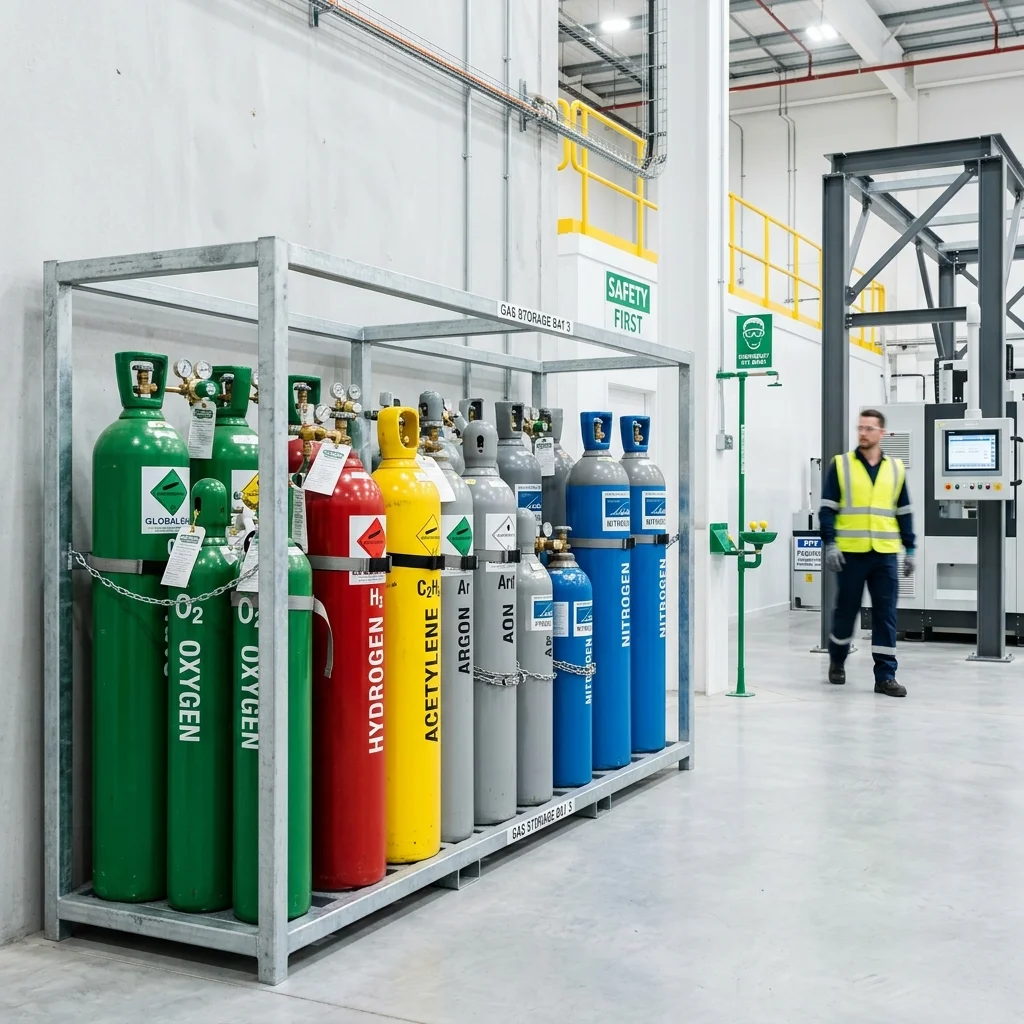
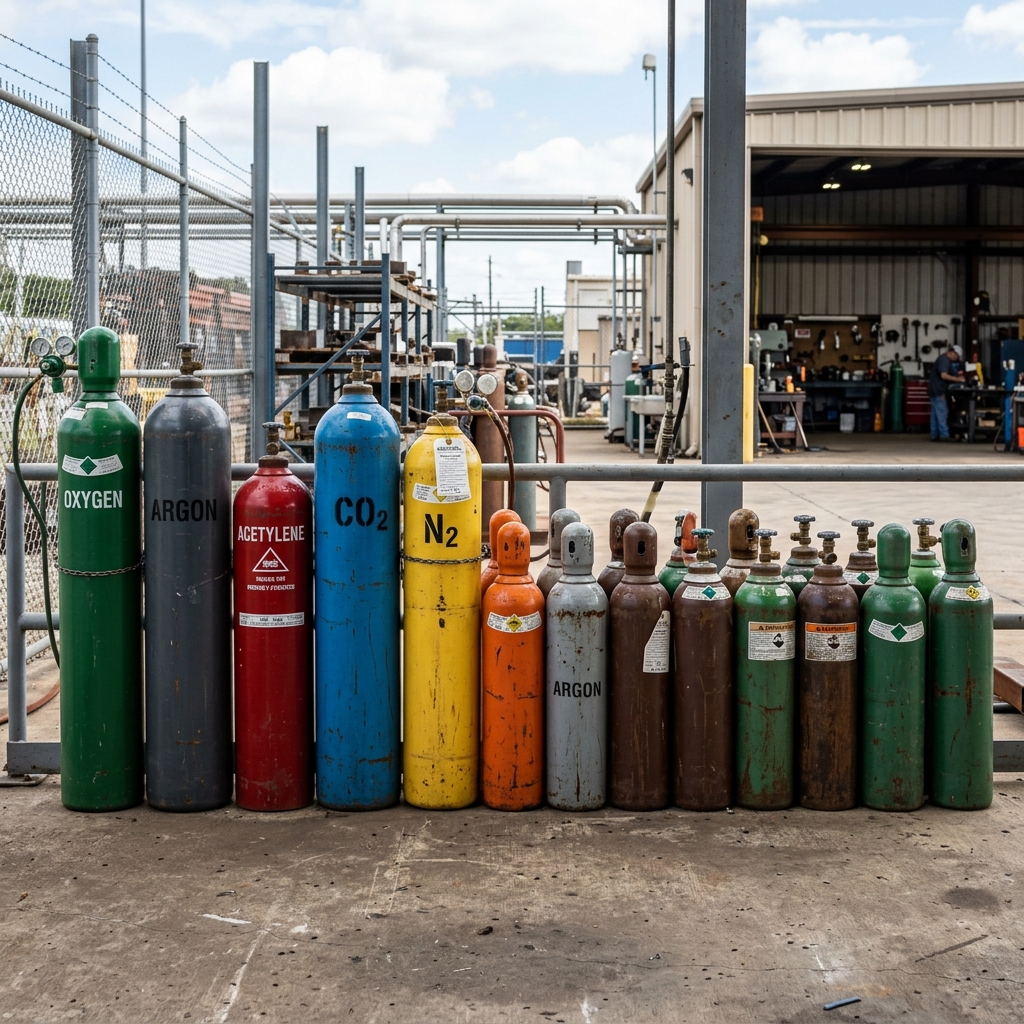
The correct gas depends on the application, required purity, cylinder size, gas consumption, operating environment and safety requirements. The sections below explain the most common industrial gas categories and where they are typically used.
Explore medical oxygen, medical air, nitrous oxide, hospital gas systems, cylinders, regulators, flowmeters and healthcare gas safety information.
Explore Medical GasesIndustrial oxygen supports combustion and is widely used in oxy-fuel cutting, welding, brazing, metal processing, glass and ceramic production, wastewater treatment and selected manufacturing processes. Oxygen may be supplied in compressed cylinders or, for higher-volume requirements, through bulk or liquid systems depending on availability.
Argon is an inert shielding gas commonly used in TIG welding and selected MIG welding applications. It is also used where an oxygen-free or inert atmosphere is required, including some laboratory, metallurgical and manufacturing processes.
Nitrogen is an inert gas used for purging, blanketing, pressure testing, food packaging, laboratory work and controlled-atmosphere processes. Liquid nitrogen is also used in cooling, freezing and specialist industrial or laboratory applications.
Carbon dioxide is used in beverage systems, food processing, welding, refrigeration-related applications and multiple industrial processes. The required grade should be confirmed carefully, especially for food or beverage use.
Acetylene is a high-temperature fuel gas used with oxygen for cutting, welding, brazing and heating. It is normally supplied in specially designed dissolved-acetylene cylinders and requires careful handling and correct regulator selection.
Helium is a light, inert gas used in specialized industrial, laboratory and technical applications. Depending on the requirement, users may need specific purity levels, cylinder sizes or controlled supply arrangements.
Laboratories, electronics, calibration, research and advanced manufacturing may require gases with defined purity or composition. These can include high-purity nitrogen, high-purity argon, specialty gases and controlled gas mixtures.
Some welding, laboratory, calibration and industrial applications require a mixture of gases rather than a single gas. The exact composition should be selected according to the process specification and equipment requirements.
Welding gas selection affects arc stability, penetration, bead appearance, oxidation and overall weld quality. Common welding-related gases include argon, CO₂, oxygen, acetylene and selected shielding gas mixtures.
Industrial gases are commonly supplied in cylinders, but the correct cylinder type and fill arrangement depend on the gas, pressure, ownership model, supplier policy and application. Customers should confirm whether they require a new cylinder, refill, exchange, rental or another supply arrangement.
For a faster quotation, provide the cylinder size or water capacity if known, current cylinder ownership information, required gas and quantity, and your delivery location.
The same gas can be used for different processes, but equipment settings and required grade may differ. Always start with the actual application, such as TIG welding, purging or food packaging.
Industrial, food-grade, laboratory and high-purity gases are not interchangeable in every application. Confirm the required specification before ordering.
Small users may prefer cylinders, while larger users may need manifolds, packs or bulk supply. Consumption volume helps determine the most practical option.
Regulators, hoses, valves and downstream equipment must be suitable for the gas and operating pressure. Do not assume one regulator can be used across all gas types.
Cylinder storage, ventilation, handling and transport conditions matter. Delivery feasibility also depends on location, quantity and supplier service coverage.
Industrial gases can be compressed, oxidizing, inert, flammable or cryogenic. Users should follow supplier instructions, labels, safety data sheets and applicable workplace procedures.
Common welding-related gases include argon, carbon dioxide, oxygen, acetylene and selected gas mixtures. The correct choice depends on the welding process and material.
Refill or exchange availability depends on the gas, cylinder ownership, cylinder condition, supplier policy and applicable safety requirements. Confirm the cylinder details when requesting a quote.
Yes, when the application requires a particular grade. Laboratories, food applications and certain manufacturing processes may need a defined purity or specification.
Send the gas name, quantity, cylinder size or supply format, application and delivery location. Current commercial pricing is best provided through a quotation.
Gass.lk helps route your enquiry to the right gas category. Include your application and location for a more accurate response.